
Hair Care & Scuba Diving
How to Survive “Dive Hair” Without Shaving Your Head
Salt water. Sun. Wind. Mask straps. Repeat four times a day on a liveaboard and suddenly your hair feels like birds can start nesting in it.
If you’ve got long hair and you dive regularly, you already know the struggle is real. The good news? You don’t have to choose between great dives and healthy hair. You just need a better routine.
Here’s how to protect your hair before, during and after diving: Discover the best hair care tips for divers.
Quick answer: Protect dive hair by soaking it in fresh water and adding a light layer of coconut oil before you get in, then braiding it or wearing a buff so the mask strap does not cause breakage. After diving, rinse with fresh water right away, use a reef-safe biodegradable conditioner, and apply a deep conditioning hair mask once a week. Trim your ends before a long trip and detangle with a wide-tooth comb after conditioning.

Before the Dive: Prep Like a Pro
1. Soak Your Hair With Fresh Water
This is the simplest trick and almost nobody does it properly.
Hair works like a sponge. If it’s dry, it will absorb as much salt water as possible. If you fully soak it with fresh water first, it absorbs far less salt.
Most dive boats and shops, in places like Komodo National Park or Gili Trawangan, have rinse showers. Use them. Drench your hair before you even think about backrolling in.
2. Use Coconut Oil Before Diving
A small amount of coconut oil on the lengths of your hair can act as a protective barrier against salt and sun.
Important:
- Use a light layer
- Focus on mid-lengths and ends
- Avoid your scalp if it gets oily easily
Pro tip: Oil only seals in moisture. If your hair is already dry or salty it will not help. So dampen your hair before applying the oil.
3. Braid It or Buff It
Loose hair + mask strap + regulator first stage = breakage.
Best options:
- Single braid
- Double braids
- Low bun
- Hair buff or head wrap
A braid reduces tangling and prevents your mask strap from rubbing directly against fragile strands. A buff also protects your scalp from sunburn, which is very real on long surface intervals.
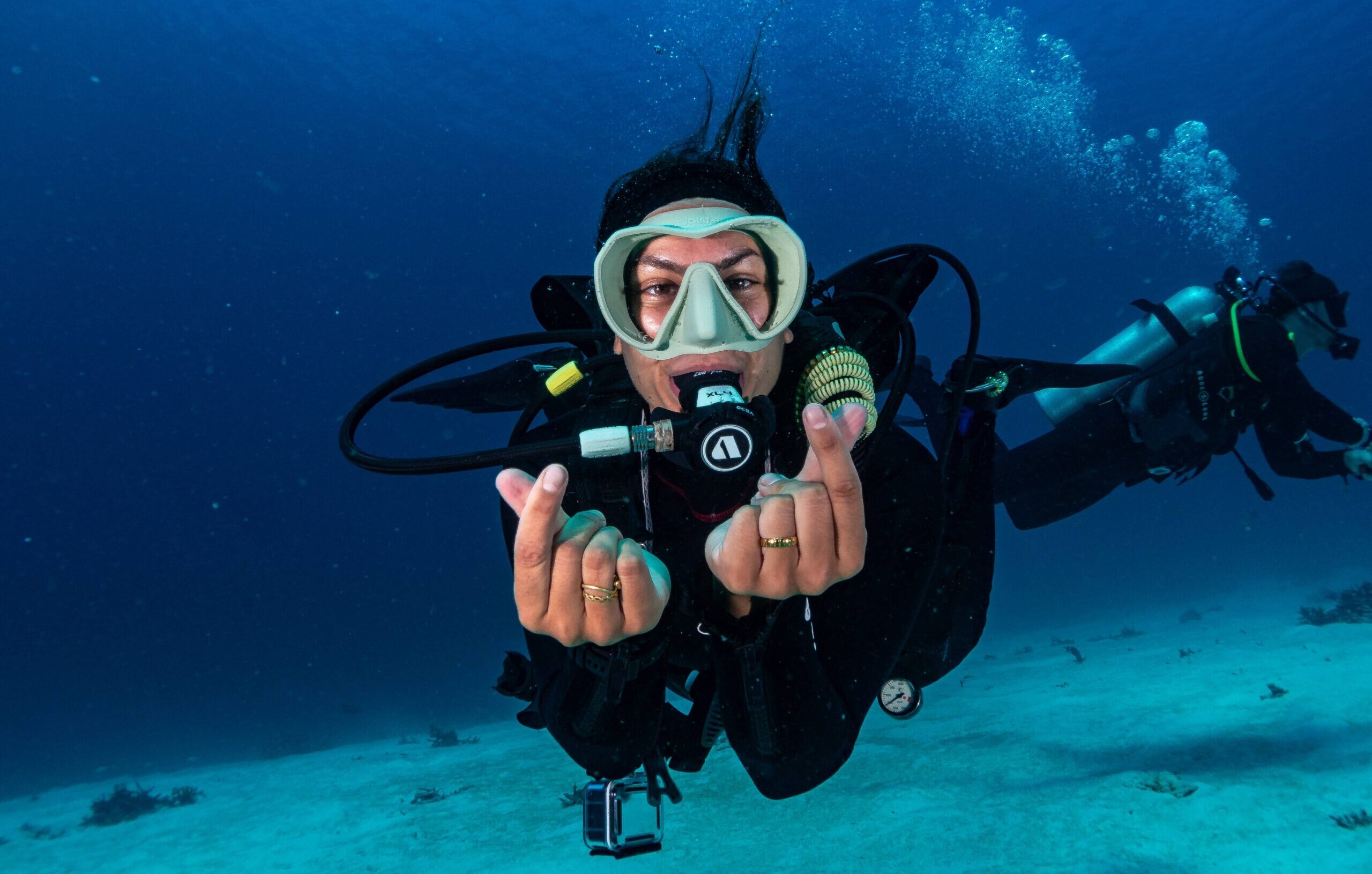

During the Dive: Minimize Damage
You can’t avoid salt water but you can avoid extra friction.
- Adjust your mask gently instead of yanking it
- Avoid pulling hair out from under straps
- Keep your hair secured between dives
If you’re doing multiple dives a day, keeping it braided the entire time will save you hours of detangling later.
After the Dive: Repair Mode
1. Rinse Immediately
As soon as you’re back on the boat, rinse your hair thoroughly with fresh water. Don’t wait until the evening. The longer salt sits, the drier it gets.
2. Use Reef Safe Conditioner
Choose biodegradable and reef friendly products so you’re not harming the ocean you just enjoyed.
Look for:
- Biodegradable formulas
- No oxybenzone
- No harsh sulfates
Many eco conscious dive brands will stock reef safe toiletries onboard.

3. Weekly Hair Masks
If you’re on a day trip or even a liveaboard in places like Similan Islands, bring a deep conditioning hair mask.
Apply it:
- After your last dive of the day
- Leave it in for 10 to 20 minutes or until the next dive
Your ends will thank you.

Extra Tips for Long Term Dive Hair Survival
- Trim your ends before a long trip
- Use a microfiber towel instead of rough hotel towels
- Avoid brushing when fully dry and tangled, rinse your hair and use conditioner to detangle
- Use a wide tooth comb after conditioning
How do you protect long hair while scuba diving?
Soak your hair in fresh water before the dive so it absorbs less salt, add a light layer of coconut oil to the mid-lengths and ends, then braid it or wear a buff so the mask strap does not rub against fragile strands. Adjust your mask gently rather than yanking it and keep your hair secured between dives.
Should you wash your hair after every dive?
Yes. Rinse your hair thoroughly with fresh water as soon as you are back on the boat, because the longer salt sits in your hair the drier it gets. Follow up with a reef-safe, biodegradable conditioner that has no oxybenzone or harsh sulfates so you are not harming the ocean you just enjoyed.
Does coconut oil really protect hair from salt water?
A small amount of coconut oil acts as a protective barrier against salt and sun, but it only seals in moisture, so it will not help if your hair is already dry or salty. Dampen your hair first, then apply a light layer to the mid-lengths and ends and avoid the scalp if it gets oily easily.
What hair products should you bring on a liveaboard?
Pack a deep conditioning hair mask to use after your last dive of the day, leaving it in for 10 to 20 minutes, plus a reef-safe biodegradable conditioner, a microfiber towel and a wide-tooth comb for detangling. Many eco-conscious dive brands also stock reef-safe toiletries onboard.
And most importantly, accept that post dive hair is part of the lifestyle. Even the best hair care tips will not keep your hair from being slightly wild, salty and sun kissed. But it is kind of the vibe.
You dive into another world every day. Your hair might be a little dramatic about it. With a few simple habits, you can keep it strong, healthy and ready for the next backroll. 🌊
Pack the right products before you go with our ultimate diving packing list. Dreaming of a multi-day trip? Browse our Similan Islands liveaboard or message us on WhatsApp and we’ll help you plan it.


